


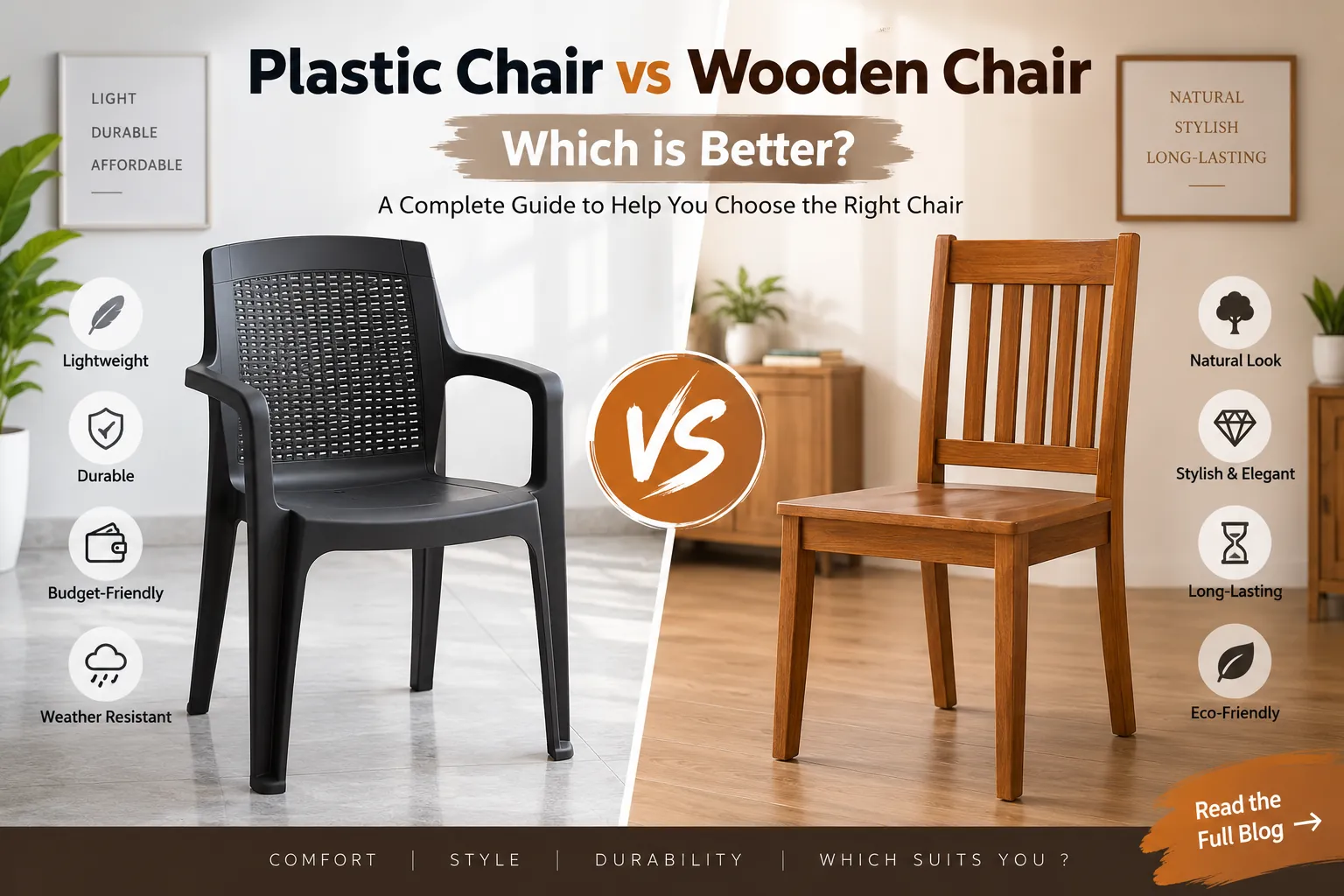
Plastic Chair vs Wooden Chair – Which is Better?
Choosing the right chair depends on where it will be used, how often it will be used, and the type of seating experience you want. Plastic chairs and wooden chairs are both popular furniture options, but each has different characteristics that make it suitable for different environments.
Whether you are furnishing a home, office, school, or commercial space, understanding the difference between plastic and wooden chairs can help you make a more informed purchasing decision.
In this guide, we compare plastic chairs and wooden chairs based on comfort, durability, maintenance, design, and overall suitability.
1. What Is a Plastic Chair?
Plastic chairs are made using plastic materials and are available in a variety of designs, colours, and sizes. They are commonly used in homes, offices, schools, waiting areas, and commercial spaces.
Plastic chairs are often preferred for their lightweight design, easy maintenance, and practical everyday use.
Advantages of Plastic Chairs
- Lightweight and easy to move
- Available in different colours and designs
- Easy to clean and maintain
- Suitable for indoor and outdoor use, depending on the model
- Available in different price ranges
- Practical for areas where chairs need to be moved frequently
Plastic chairs can be a suitable choice when convenience, easy maintenance, and flexible seating arrangements are important.
2. What Is a Wooden Chair?
Wooden chairs are made using wood or wood-based materials and are available in traditional, modern, and contemporary designs. They are commonly used in homes, offices, schools, dining areas, and commercial spaces.
Wooden chairs are often chosen for their natural appearance, solid feel, and ability to complement different interior styles.
Advantages of Wooden Chairs
- Natural and attractive appearance
- Available in a variety of designs
- Suitable for traditional and modern interiors
- Can complement wooden tables and other furniture
- Suitable for different seating environments
- Available in different finishes and styles
Wooden chairs can be a suitable choice when appearance, design, and a more traditional furniture style are important.
3. Plastic Chair vs Wooden Chair: Key Differences
The best choice depends on your specific requirements. Here is a general comparison:
| Feature | Plastic Chair | Wooden Chair |
|---|---|---|
| Material | Plastic | Wood or wood-based materials |
| Weight | Often lightweight | Depends on the design and material |
| Maintenance | Generally easy to clean | Depends on the finish and material |
| Design | Available in various colours and styles | Available in traditional and modern styles |
| Portability | Often easy to move | Depends on the design |
| Appearance | Practical and versatile | Natural and classic |
| Suitable For | Homes, offices, schools, and commercial spaces | Homes, offices, schools, and commercial spaces |
Note: Actual comfort, durability, and performance depend on the specific chair model, material quality, and construction.
4. Which Chair Is More Comfortable?
Comfort depends on the design of the chair rather than the material alone.
A well-designed plastic chair can provide comfortable seating, while a wooden chair with a suitable seat and backrest can also be comfortable.
When comparing chairs, consider:
- Seat height
- Seat width
- Seat depth
- Backrest design
- Seat cushioning
- Overall seating comfort
If you are purchasing chairs for long hours of use, it is important to choose a design that suits the user's requirements.
5. Which Chair Is More Durable?
Both plastic and wooden chairs can be suitable for everyday use when they are made with appropriate materials and construction.
However, durability depends on factors such as:
- Material quality
- Construction
- Chair design
- Expected usage
- Maintenance
- Weight capacity
Instead of choosing a chair only because it is plastic or wooden, compare the specifications and suitability of the individual model.
6. Which Chair Is Easier to Maintain?
Plastic chairs are generally easy to clean and maintain, making them a practical option for areas where chairs are used frequently.
Wooden chairs may require more attention to their finish and material, depending on the design and environment.
Before purchasing, consider:
- Cleaning requirements
- Expected usage
- Indoor or outdoor use
- Material finish
- Maintenance requirements
The right choice depends on how much maintenance you are comfortable with and where the chair will be used.
7. Which Chair Is Better for Offices?
Both plastic and wooden chairs can be suitable for offices, depending on the type of workspace.
Plastic Chairs for Offices
Plastic chairs can be useful for:
- Waiting areas
- Reception areas
- Meeting rooms
- Training rooms
- Flexible seating arrangements
Wooden Chairs for Offices
Wooden chairs can be useful for:
- Reception areas
- Meeting rooms
- Conference spaces
- Traditional office interiors
- Workspaces where a natural furniture appearance is preferred
For regular workstations, it is important to choose a chair based on comfort, dimensions, and the requirements of the user.
8. Which Chair Is Better for Schools?
Both plastic and wooden chairs can be suitable for schools, depending on the classroom requirements.
When selecting school chairs, consider:
- Student age group
- Seat height
- Seat width
- Backrest design
- Classroom layout
- Material quality
- Ease of maintenance
The right school chair should be suitable for the students who will use it and the classroom environment.
9. Which Chair Is Better for Home Use?
For home use, the choice depends on the room, furniture style, and intended purpose.
Plastic chairs may be suitable for:
- Dining areas
- Balconies
- Utility spaces
- Additional seating
- Everyday practical use
Wooden chairs may be suitable for:
- Dining rooms
- Living rooms
- Study areas
- Home offices
- Traditional or modern interiors
Choose a chair that matches your home décor and provides the comfort you need.
10. Which Chair Offers Better Value for Money?
The value of a chair depends on its quality, design, features, and suitability for your requirements.
Plastic chairs may be a practical option when you need lightweight seating and easy maintenance. Wooden chairs may be a suitable option when you prefer a natural appearance and a particular furniture style.
Before purchasing, compare:
- Material quality
- Design
- Comfort
- Durability
- Maintenance
- Budget
The best chair is the one that meets your needs and offers good value for your intended use.
11. How to Choose the Right Chair for Your Requirements
Before making a purchase, ask yourself:
- Where will the chair be used?
- How many chairs do I need?
- How frequently will they be used?
- What size and dimensions are required?
- Which material suits my workspace?
- What is my budget?
- Do I need a lightweight or more traditional design?
Answering these questions will help you narrow down your options and choose a chair that is suitable for your space.
12. Buy from a Reliable Furniture Supplier
Choosing a reliable furniture supplier can make the purchasing process easier.
A good supplier should provide clear product details, accurate dimensions, and information about the available materials and features. If you are purchasing chairs for an office, school, or commercial space, it is also useful to compare different models before making a decision.
At OM WOODS, we offer furniture solutions for offices, homes, schools, and commercial spaces. Explore our furniture collection to find chairs and other furniture suitable for your requirements.
Frequently Asked Questions
Q.1 Which is better, plastic chair or wooden chair?
ANS. Neither is universally better. The right choice depends on your usage, comfort requirements, design preference, maintenance needs, and budget.
Q.2 Are plastic chairs suitable for offices?
ANS. Yes, plastic chairs can be suitable for offices, especially in waiting areas, meeting rooms, training rooms, and other spaces where practical seating is required.
Q.3 Are wooden chairs suitable for schools?
ANS. Yes, wooden chairs can be suitable for schools when their dimensions, design, and material are appropriate for the students and classroom environment.
Q.5 Which chair is easier to maintain?
ANS. Plastic chairs are generally easy to clean and maintain. Wooden chairs may require more attention to their finish, depending on the material and design.
Q.6 How do I choose the right chair for my space?
ANS. Consider the intended use, available space, seating comfort, material, dimensions, and budget before making a purchase.
Conclusion
Plastic chairs and wooden chairs both have their own advantages, and the best choice depends on your specific requirements.
Plastic chairs can be a practical option when lightweight seating, easy maintenance, and flexible use are important. Wooden chairs can be a suitable option when you prefer a natural appearance, traditional design, and a different furniture style.
By comparing comfort, material, dimensions, durability, maintenance, and budget, you can choose the right chair for your home, office, school, or commercial space.
Looking for plastic chairs or wooden chairs? Explore OM WOODS and find the right furniture for your requirements.