


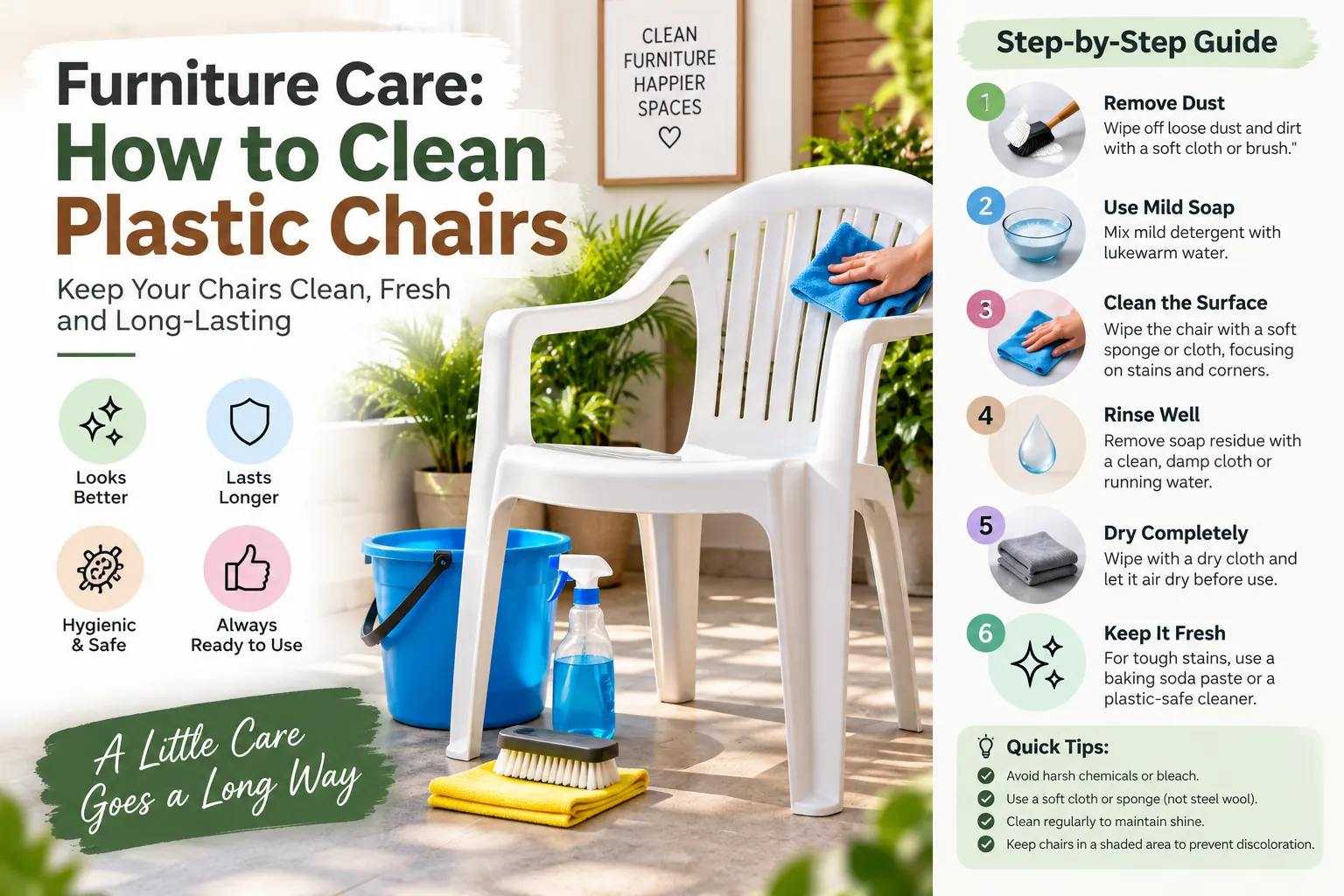
Furniture Care: How to Clean Plastic Chairs
Plastic chairs are popular for homes, offices, schools, restaurants, gardens, and outdoor spaces because they are lightweight, durable, and easy to maintain. However, regular cleaning is important to keep plastic chairs looking fresh, hygienic, and attractive.
Dust, food stains, oil, mud, and outdoor dirt can build up on the surface over time. With the right cleaning method, you can maintain your plastic chairs without damaging their color or finish.
This guide explains how to clean plastic chairs safely and effectively.
1. Remove Loose Dust and Dirt
Before using water or cleaning products, remove loose dust and dirt from the chair.
You can use:
- A soft cloth
- A microfiber duster
- A soft-bristle brush
- A vacuum cleaner with a brush attachment
Pay special attention to the seat, backrest, legs, joints, and corners where dust may collect.
Avoid using hard brushes or rough materials because they can create scratches on the plastic surface.
2. Prepare a Mild Cleaning Solution
For regular cleaning, use a simple mixture of:
- Lukewarm water
- A small amount of mild dishwashing liquid or gentle soap
Mix the solution properly. Strong chemical cleaners are usually unnecessary for everyday plastic chair cleaning.
Avoid using excessive soap because it may leave a sticky residue on the surface.
3. Wipe the Chair with a Soft Cloth
Dip a soft cloth or sponge into the cleaning solution and gently wipe the chair.
Clean the following areas carefully:
- Seat surface
- Backrest
- Armrests
- Chair legs
- Underside of the seat
- Corners and joints
For stubborn dirt, allow the mild solution to remain on the surface for a few minutes before wiping. Do not scrub aggressively.
4. Clean Stubborn Stains Carefully
Different stains may require slightly different cleaning methods.
Food and Beverage Stains
Use mild soap and water. Wipe the stain gently and rinse the area with clean water.
Oil and Grease
Use a small amount of mild dishwashing liquid because it can help remove oily residue. Avoid strong degreasers that may affect the plastic finish.
Mud and Outdoor Dirt
Allow the mud to dry slightly, brush away the loose dirt, and then clean the chair with water and mild soap.
Ink or Permanent Marks
Ink stains can be difficult to remove. Test any cleaning product on a hidden area first. Avoid using harsh solvents unless the chair manufacturer specifically recommends them.
5. Rinse the Chair Properly
After cleaning, wipe the chair with a clean cloth soaked in plain water. This helps remove soap and cleaning residue.
If the chair is being washed outdoors, rinse it with clean water. Make sure water does not remain trapped in joints or hollow sections.
6. Dry the Chair Completely
Use a dry, soft cloth to remove excess water. Allow the chair to dry completely before using or stacking it.
Proper drying helps prevent:
- Water marks
- Dust sticking to the surface
- Unpleasant smell
- Moisture accumulation in joints
Avoid stacking wet plastic chairs because trapped moisture can create dirt buildup and odor.
7. Use Baking Soda for Light Stains
For mild stains, baking soda can be used carefully.
Create a soft paste using:
- A small amount of baking soda
- A little water
Apply it gently to the stained area, leave it for a short time, and wipe it with a soft cloth. Rinse the surface afterward.
Do not scrub too hard, as abrasive particles may make the surface look dull or scratched.
8. Avoid Harsh Cleaning Products
Do not use strong chemicals or abrasive products unless they are specifically approved for plastic furniture.
Avoid:
- Bleach in high concentration
- Strong acids
- Paint thinner
- Petrol or diesel
- Acetone
- Harsh bathroom cleaners
- Steel wool
- Rough scrubbers
- Abrasive powders
These products may damage the surface, fade the color, or make the plastic brittle over time.
9. Protect Plastic Chairs from Direct Sunlight
Plastic chairs used outdoors may become dusty or lose their appearance when exposed to strong sunlight for long periods.
To improve their life:
- Keep them in a shaded area when not in use.
- Use a suitable furniture cover.
- Avoid leaving them under extreme heat for extended periods.
- Do not place them near open flames or high-heat sources.
Some plastic chairs are designed for outdoor use, but proper care can still help maintain their finish.
10. Clean Plastic Chairs Regularly
Regular cleaning is easier than removing old stains.
A simple maintenance routine can include:
- Dusting once or twice a week
- Wiping the chair whenever spills occur
- Deep cleaning once a month
- Cleaning immediately after outdoor events or heavy use
- Checking the legs and joints regularly
For schools, offices, restaurants, and public spaces, chairs should be cleaned more frequently because they are used by many people.
11. Avoid Overloading the Chairs
Cleaning is important, but proper usage also affects the life of plastic chairs.
Avoid:
- Standing on the chair
- Dragging it roughly across the floor
- Placing extremely heavy objects on it
- Exposing it to excessive heat
- Using damaged or cracked chairs
If you notice cracks, loose legs, or structural damage, stop using the chair and replace it if necessary.
12. Store Plastic Chairs Correctly
When plastic chairs are not in use, store them in a clean and dry location.
For proper storage:
- Stack chairs carefully.
- Do not drag stacked chairs.
- Keep them away from sharp objects.
- Avoid placing heavy items on top of them.
- Protect outdoor chairs from rain and excessive sunlight when possible.
Correct storage helps prevent scratches, stains, bending, and unnecessary damage.
Frequently Asked Questions
Q.1 How often should plastic chairs be cleaned?
ANS. Plastic chairs used regularly should be dusted weekly and wiped whenever spills occur. A deeper cleaning can be done once a month or more frequently in schools, offices, restaurants, and public areas.
Q.2 Can I use bleach to clean plastic chairs?
ANS. Avoid using strong or concentrated bleach. It may fade the color or damage the plastic surface. Use mild soap and water for regular cleaning.
Q.3 How can I remove oil stains from plastic chairs?
ANS. Use a small amount of mild dishwashing liquid with lukewarm water. Wipe the stain gently and rinse the surface with clean water.
Q.4 Can plastic chairs be washed with a water hose?
ANS. Yes, many plastic chairs can be rinsed with clean water. However, avoid excessive water pressure and dry the chairs completely after washing.
Q.5 How can I prevent plastic chairs from fading?
ANS. Keep them away from prolonged direct sunlight when possible. Use covers or store them in a shaded area when they are not being used.
Q.6 Can I use a rough scrubber on plastic chairs?
ANS. No. Rough scrubbers and steel wool can scratch the surface. Always use a soft cloth, sponge, or soft-bristle brush.
Conclusion
Cleaning plastic chairs is simple when you use the right method and suitable cleaning products. Regular dusting, mild soap, gentle wiping, proper rinsing, and complete drying can help maintain the appearance and hygiene of plastic chairs for a longer time.
Avoid harsh chemicals, abrasive scrubbers, excessive heat, and rough handling. With proper care and storage, plastic chairs can remain useful, clean, and attractive in homes, offices, schools, and outdoor spaces.
For durable and easy-to-maintain plastic furniture, explore the quality furniture solutions available at OM WOODS.